
CASE STUDYSimply
A sound system, written down.
Sonic Identity · In-app soundA piano app can’t use a piano.
Simply grew from one piano app into a family: guitar, singing, drawing. One identity had to work across all of them, and in a product that teaches instruments, any recognizable instrument becomes a bug.



Sonic Logo
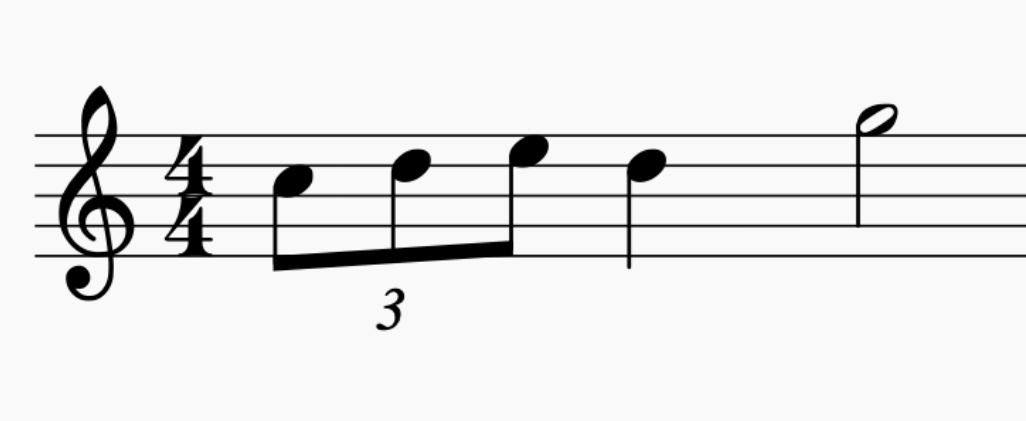
The melody was already Simply’s, from an old promo. I transposed it to C major and kept it pentatonic, so it can be reharmonised without losing recognition, then built a beginning and an ending around it.
IGNITION
The start
Guitar strum, marimba chord / glissando.
The moment you decide to begin.
MELODY
The Learner’s Journey
Five notes. Steps down before it climbs.
Ups and downs, the gains and step backs of the learning journey.
SPARK
Simply’s essence
Celeste, held.
Embodies the Simply essence of being a warm, friendly, positive, and happy guide with a bit of a magical touch.
In-app sounds
The logo’s instruments couldn’t survive firing fifty times a lesson, so I built one that doesn’t exist. Marimba, staccato FM synth, and a pop layered, never played alone. Any one of them is recognizable as itself. Together they belong only to Simply and the team called it the “Simply Pop”.
Marimba
FM Synth Pop
Pop
Simply Pop
Three layers, functioning as one. The timbre belongs to Simply — to no instrument, and no genre a learner might already know.
WHAT GOT BUILT FROM IT
Journey Item Complete
The Simply Pop ascending, a reverse marimba pulling the anticipation up, then the celeste landing the payoff.
Course Complete
The ceiling. The highest moment in the app, so it's the full band — everything the palette has, at once.
One Star
Two Stars
Three Stars
Fail
FunctionLearner misses a section and needs to go back.
Emotion“Let's try that again.” A neutral alert. Never frustration.
InformationThat section wasn't right.
BehaviorKeep going, undiscouraged.
AttributesRelated to the checkmark sound, but shorter. Short articulation reads as an alert; long articulation reads as disappointment.
Written Down
Every sound answered the same four questions, and the answers went in a Style Guide so the sonic branding could stay cohesive without me.
Checkmark
FunctionLearner finishes a section. Keep going.
EmotionAccomplishment, but not arrival.
InformationThat section is done.
BehaviorContinue.
AttributesFires constantly, in an app where someone is trying to play music — tonal elements needed to be short. And it can't be guitar or piano, or it belongs to one product instead of all of them.
One voice, across a whole family of products — built to be handed off.