

CASE STUDYSimply
A sound system, written down.
Sonic Identity · In-app soundA piano app can’t use a piano.
Simply teaches millions of people to play music, across a family of apps — piano, guitar, singing, drawing. They needed one sonic identity flexible enough to live across all of them, with an unusual catch: in a product that teaches instruments, any recognizable instrument in the UI becomes a bug. The guitar that feels right in Simply Guitar is wrong in Simply Piano.
01 · 2020–2023
The work started outside the app: campaigns with Duolingo, Gunner, Giant Ant, and Buck, the first DuoCons, product ads, and social experiments. Some of it was already identity work in disguise. The Plus campaign was where the marimba entered Duo's vocabulary, paired with an OP-1 — neither an instrument anyone takes entirely seriously, both good at short percussive sounds that still carry a pitch. The character reason and the practical reason were the same one, and it carried through everything after.
Before the App
Tier campaigns · DuoCons · Product ads · SocialBefore there was a system, there was a body of work proving what the brand could sound like.
9 product ads · 3 tier launches · 3 DuoCons · Social media experiments
Duolingo Plus 2021
DuoCon 2021
02 · 2022–2025
The App
The core sounds · LIghtning · Streaks · The app's first MINI-GAMELightning (combo)
Then the product itself. It began with the lightning — the first sound designed to feel like Duolingo rather than default to stock — and grew into the app's first complete in-lesson sound suite: correct answers, completions, every major game mechanic, finalized in 2024 with leadership fully behind a sonic direction for the product. These are sounds a learner hears dozens of times a day, so every one was designed to survive repetition: rewarding the first time, invisible in the best way the thousandth.
Shorter helps, and no pitch that fatigues, but always matters more. A reward can be loud and obnoxious and never wear out — the old correct-answer sound proved that. A stat screen can't get away with the same thing. There, delight has to win quietly.
Streaks
Session End Stats
Leaderboard
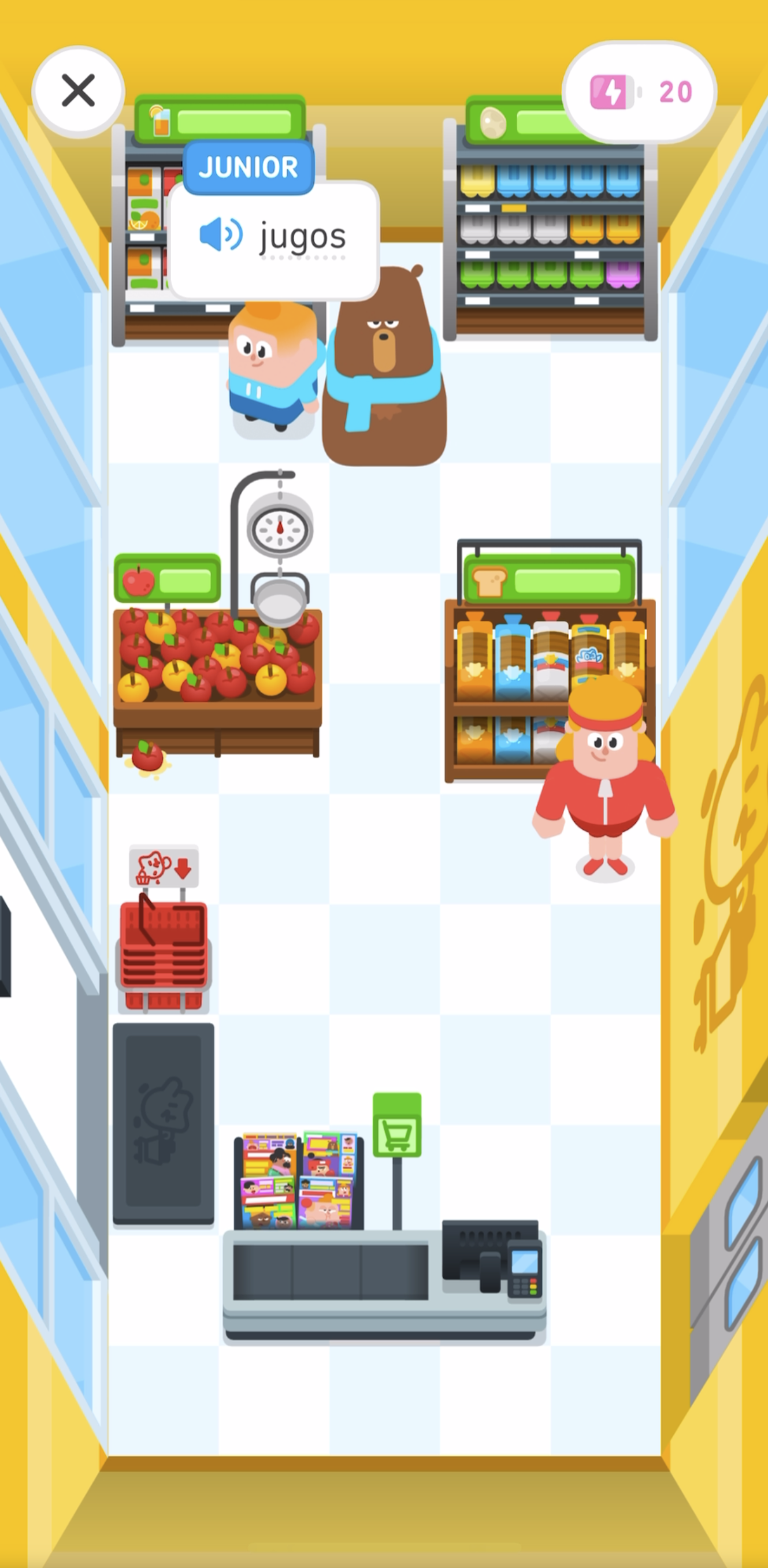
Adventures — Duolingo’s first RPG
The language learning app's first original music, written for Adventures, the app’s first mini-game. The task was to make a calming and delightful video game backing track, based on the existing “Duolingo sound”, that could be looped endlessly. It didn't stay in the game: the promo was built out of the same material.
A subset of Adventures sound effects were also made for the mini-game. A more gamified version of the Duolingo in-app sounds.
03 · 2024
The voice. The story of “WaBing”
Character voice · WaBing · Buff Duo WaBingWaBing started as a question: what could Duo sound like?
Then I asked a better one: what would Duo sound like mimicking the correct-answer sound? Learners already knew that sound by heart, so Duo copying it back had a joke built in. Menacing, cute, a little annoying, but endearing. Two syllables in my own voice, first deployed as the five-in-a-row celebration. When a streak hits ten, a buff-Duo WaBing escalates it. One voice, with a hierarchy. Then “WaBing” became a thing.
WaBing
Buff Duo
The Warm-up
A little behind-the-scenes bonus content for making it this far. The take of me getting ready to record WaBing. Hope you enjoy.
04 · 2025
The language. WaBinglish.
WaBinglish · The anime series · DuoConWhen the anime series needed Duo to actually speak, I extrapolated the voice into WaBinglish. The rules came first. Duo's mouth can only make certain sounds, so I wrote the phoneme set and stayed inside it, everything built out from the WaBing phoneme itself. Nothing that reads as a North American accent. Nothing that lands like the Minions. It had to sound like it could come from anywhere, which is how it ends up belonging to nowhere.
Then the harder half. The words carry no meaning, so delivery carries all of it. WaBinglish is mostly linguistic interjections (the colorful expressive noises people make instead of words) with intonation borrowed across cultures. How do you build a disappointed sound that reads the same in forty markets? That question was most of the work. Now and then Duo breaks into transliteration, the way Japanese renders an English loanword: for “flame,” he says fuh-lem-ooh.
Duolingo Anime · The Final Test
05 · 2025 – PRESENT
The system
New mechanics · Chess launch · The Super Bowl spotDuolingo has since built a dedicated lovely audio and haptics team. The work continues — new mechanics, the chess launch, and in 2026, music, sound, and WaBinglish for the pre-Super Bowl spot with Giant Ant.
In-app · InteractiveFlashcard Frenzy — the newest mechanic
Commercial · New FeatureChess Ad
CommercialPre-Super Bowl Ad
THE THINKING
Every sound answered to the same character. Functional, delightful, intuitive, polished and never too serious. Duo has rules — what he can sound like, what he never would. All of it is a design system, made of sounds, voices and language. Six years of separate projects play like one voice because the character logic never bent.
They were also never written down. They didn't need to be. They lived in my head, and I made every sound.
That works right up until it doesn't. A brand outgrows one person's memory and taste: teams get hired, vendors change, a feature ships on a deadline. What happened at Duolingo organically is what I now do deliberately — the same system, designed on purpose and written down, so it survives without me in the room.
THE REST OF IT

EVENTSThe sound of DuoCon
5 years, 3 sonic worlds

Branded campaignsPlus, Super, and Max
3 tiers, 3 sounds, 1 brand
IN-APPThe core in-app sounds
The system 100M+ learners hear
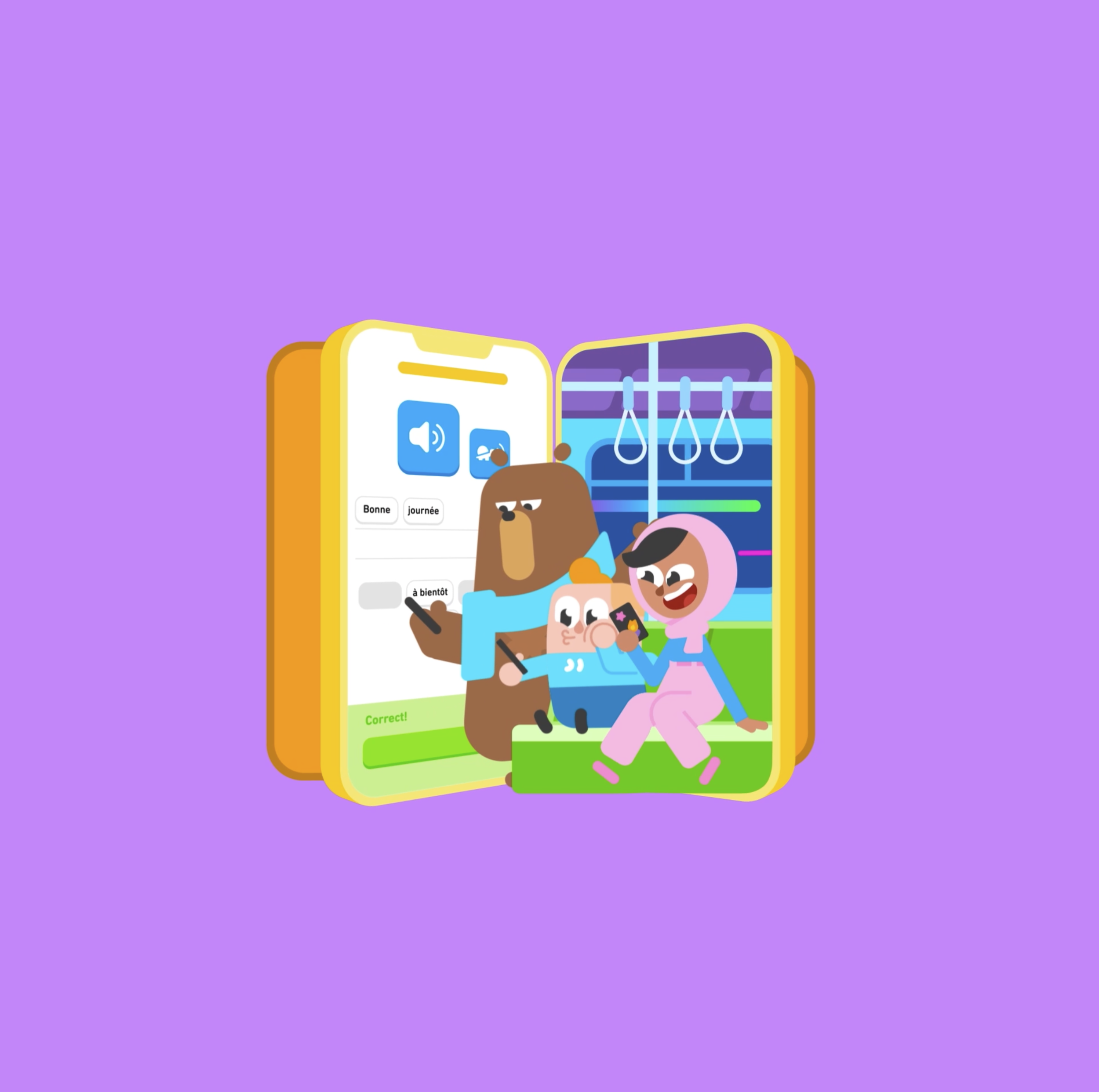
CommercialsProduct ads
6 spots. Chess, Adventures, Family Plan and more.
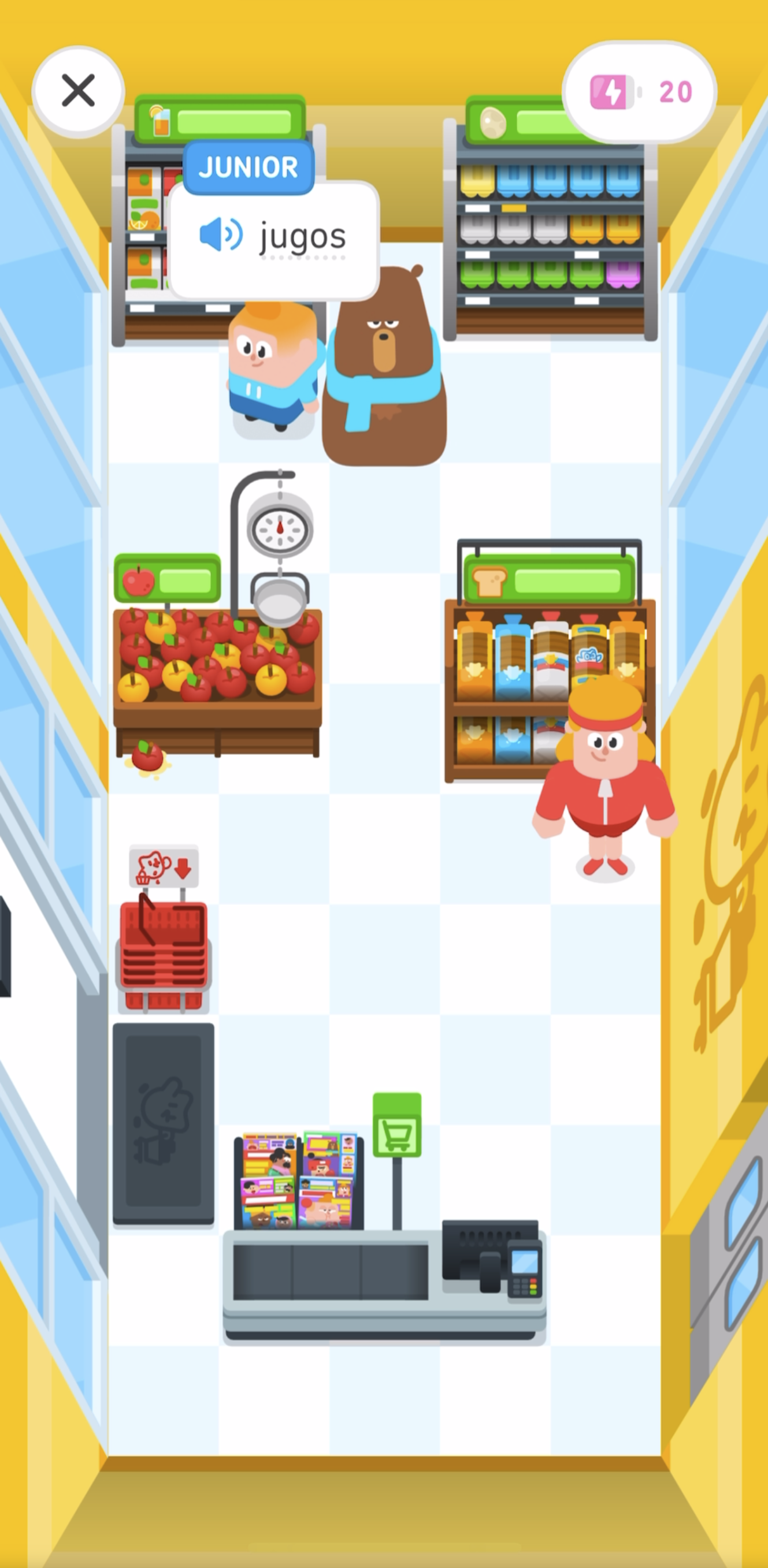
GAMEAdventures mini-game
Original music and sound for Duolingo’s first RPG.
CREDITS
Animation, production: Giant Ant · Gunner · Buck · Duolingo
Music, sound design, voice, sonic identity: Ambrose Yu