
Duolingo
Sonic IdentityCASE STUDYWabing!
Duo’s voice. Yep, that’s me. Heard by 100M+ learners, in 40 languages.
Six years of separate projects that turned into the Duolingo sound.
In 2020 the app barely had sound. Today Duo has a voice I created, heard by over 100 million learners in 40 languages, a made-up language he speaks, and a sound system that plays in every lesson, millions of times a day. None of it was commissioned as a branding project. All of it came to feel like one identity: with the same palette, same hierarchy, same character in mind every time.
Where it started
It all started outside of the app. The Plus campaign in 2021 had a pretty open brief: “make it sound like Duolingo”. There was no Duolingo sound yet, so I made one on an OP-1 and a marimba into something that came from the blend of video game and cartoon theme music. That palette stuck, and everything after it was built from the same handful of instruments.
Duolingo Plus 2021
DuoCon 2021
The App
We had a good thing going so we moved on to the product itself. Starting with early explorations of Duolingo Math, then prototyping for the main lessons. For the first time Duolingo didn’t have a stock sound in-app and these sounds became the first complete in-lesson suite: correct answers combos, session end screens, every major game mechanic, finished in 2024 and 2025.
Of the hundreds of sounds made, 50+ sounds launched and Duolingo’s sonic identity started to form.
Lightning (combo)
Streaks
Session End Stats
Leaderboard
The voice (WaBing)
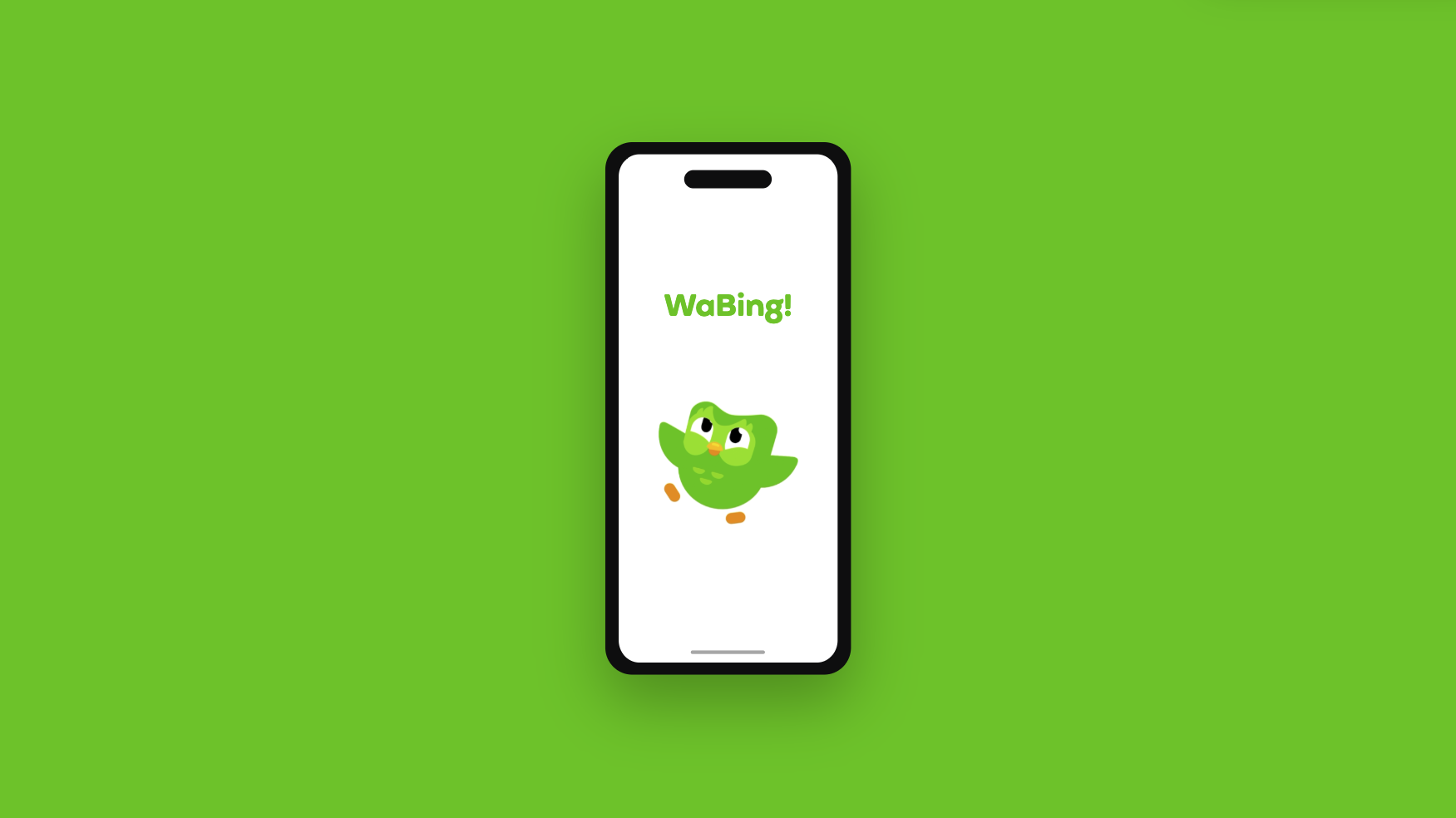
The ask was a memorable Mario wahoo but using the Duolingo correct-answer sound. So I pitched a catchphrase and sonic logo of Duo mimicking the correct-answer sound: two syllables in my voice, pitched, processed and performed so they read as Duo. That became WaBing. Then “WaBing” became a thing.
WaBing
Buff Duo
The language (WaBinglish)
The anime series needed something the sonic logo “Wabing” couldn’t do: Duo actually speaking. So I created WaBinglish — a separate, made-up language, built from the ground up for the series. I made up some rules to keep things intentional and cohesive: his mouth only makes certain shapes, so the phoneme set came from that, and nothing in it reads as a specific accent. It had to sound like it could come from anywhere.
The words carry no meaning, so delivery carries all of it. Mostly interjections (the colorful noises people make instead of words) with intonation borrowed from a lot of places. As a nod to anime, now and then he breaks into transliteration, the way Japanese renders an English loanword. "Flame," is “fuh-lem-ooh”.
Duolingo Anime · The Final Test
The system
Three different surfaces — a feature inside the app, an ad for a new course, thirty seconds on network TV. Different projects, different briefs, but a consistent sensibility carried across all of them.
In-app · InteractiveFlashcard Frenzy — the newest mechanic
Commercial · New FeatureChess Ad
CommercialPre-Super Bowl Ad
The rest of it
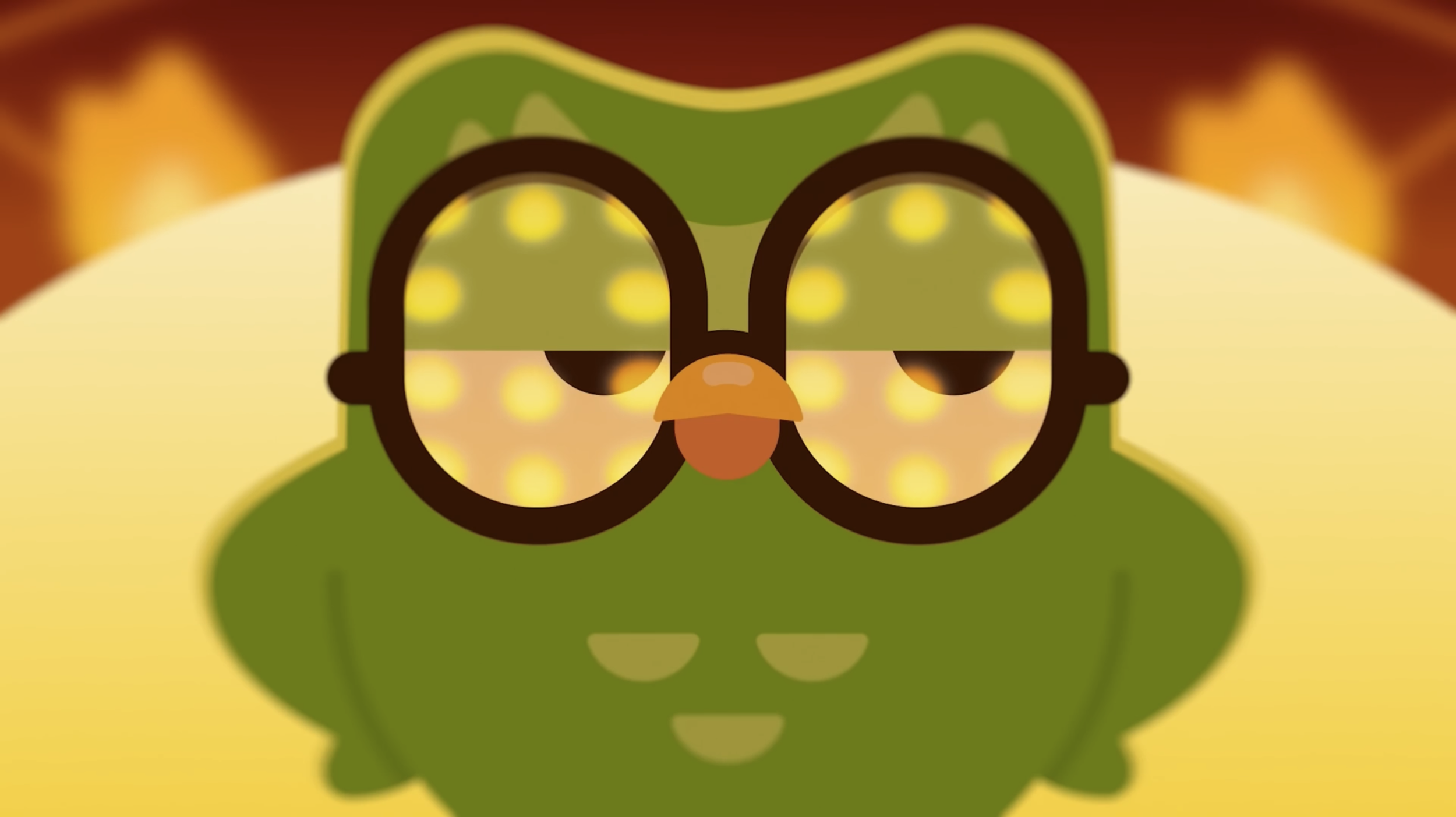
The sound of DuoCon
5 years, 3 sonic worlds
The core in-app sounds
The system 100M+ learners hear
Plus, Super, and Max
3 tiers, 3 sounds, 1 brand
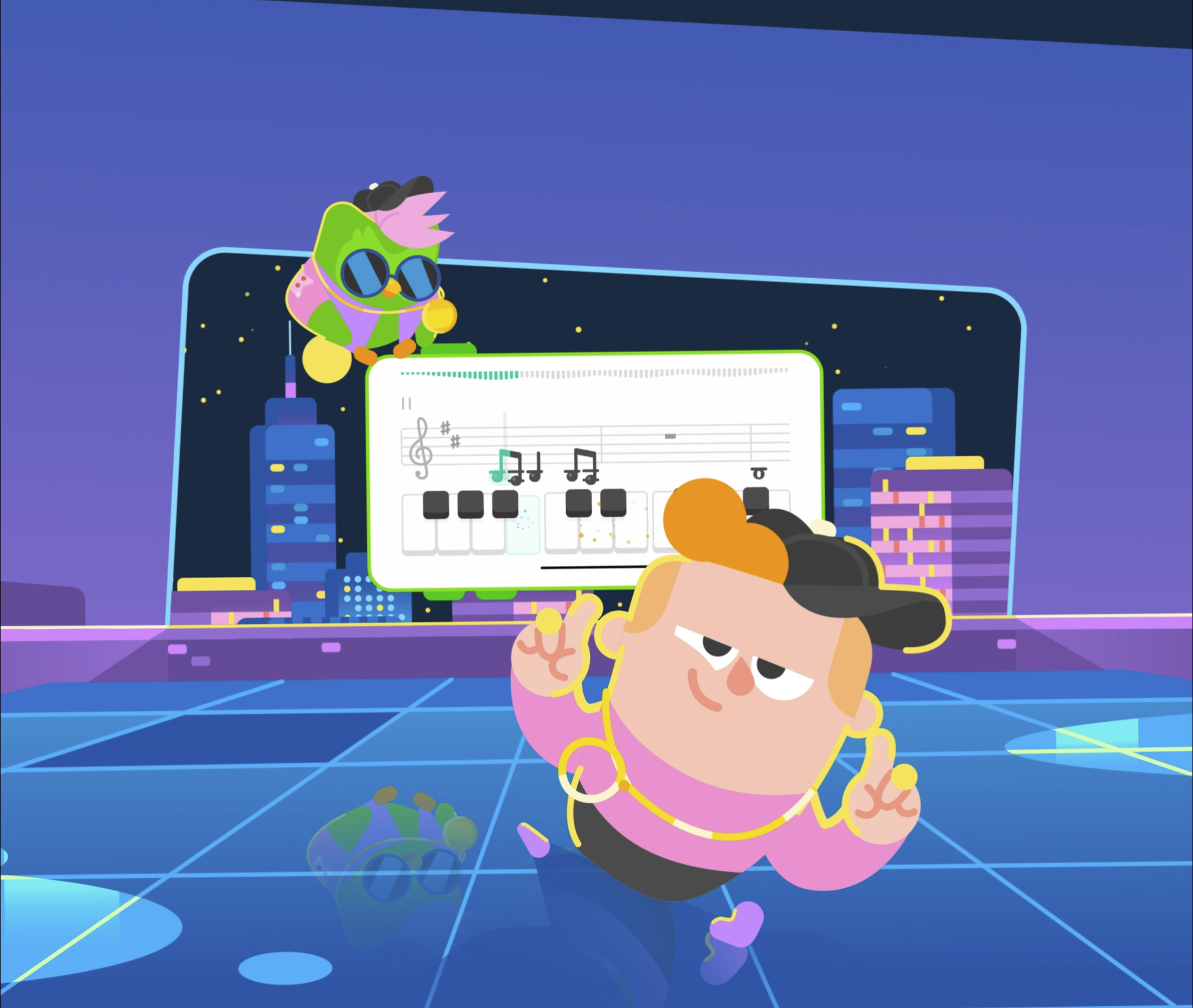
Product ads
6 spots. Chess, Adventures, Family Plan and more.
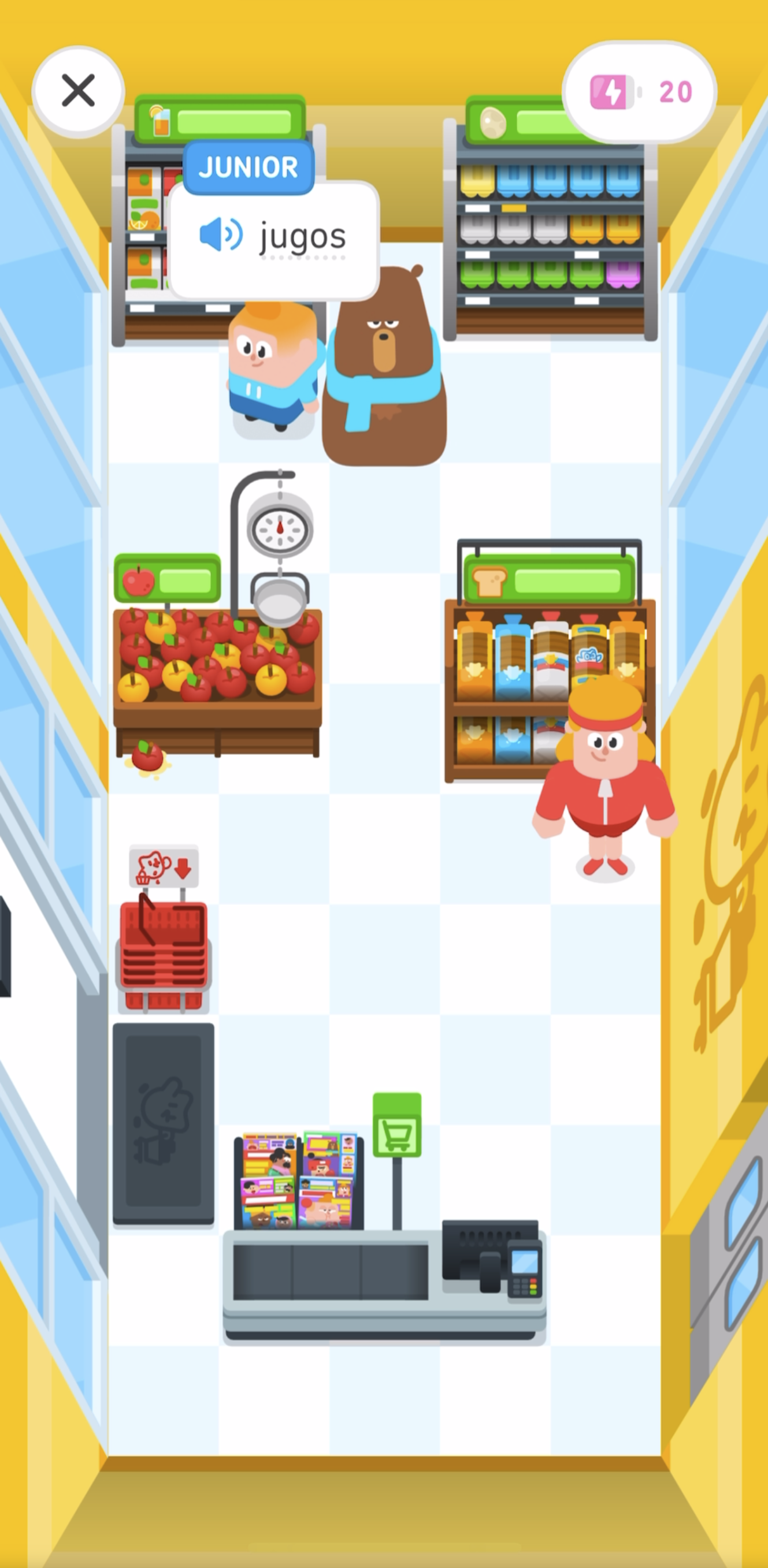
Adventures mini-game
Music and sound for Duolingo’s only in-app game
CREDITS
Animation, production: Giant Ant · Gunner · Buck · Duolingo
Music, sound design, voice, sonic identity: Ambrose Yu
The thinking
Every sound answered to the same character. Functional, intuitive, never too serious. Duo has rules about what he can sound like and what he never would. Six years of separate commissions, each its own project, connected by a consistent way of working — the same instincts about character and restraint applied fresh each time.
What happened at Duolingo by accident is what I try to do intentionally now, written down, so it holds without me in the room.